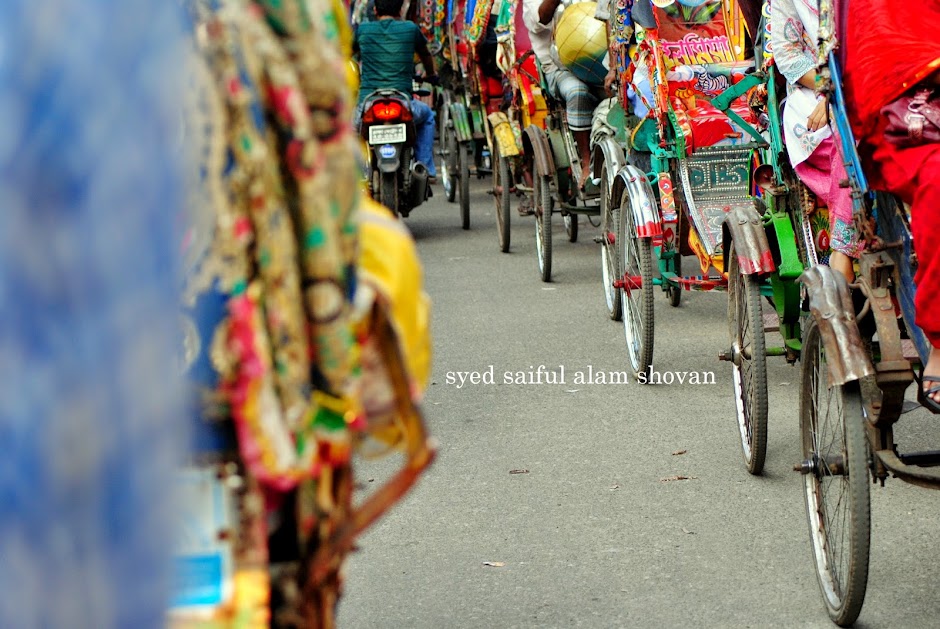
RICKSHAW

Wednesday, April 6, 2011

Wrong-minded modernization: rickshaw bans

Wrong-minded modernization: rickshaw bans


A new wave of rickshaw bans has just occurred in Dhaka. How appropriate were those bans? How sound are the arguments against rickshaws?

The rickshaw has for decades been attacked by the media and others in Bangladesh as being slow, causing traffic jams and thus congestion, being an inhuman occupation for the pullers, and holding Dhaka back from modernization. Just how true are those claims?

First, does the experience with rickshaw bans to date suggest that such bans effectively reduce traffic congestion? On the contrary; even government reports show that rickshaw bans do nothing to improve traffic, and sometimes traffic speed even further deteriorates following rickshaw bans. In addition, people’s travel cost as well as time increase. Are VIP roads free of traffic congestion? Will the government blame rickshaws for congestion until there are no rickshaws left, and then what will they blame? Cities around the world with no rickshaws waste millions of dollars in lost time and wasted fuel due to traffic jams caused entirely by cars. Why are we so eager to join them?

Are rickshaws slow? Government reports indicate that in many cases, it is faster to walk than to take a bus. Average car speed in many Asian cities is no greater than the speed of a rickshaw. The fact that cars can on empty streets move faster than rickshaw is meaningless in Dhaka traffic situations, except in the danger it implies: when cars race on empty roads, they regularly kill pedestrians. How many fatal accidents are caused by rickshaws? Meanwhile, congestion makes cars slow; too many cars cause congestion. Rickshaws not only do not kill pedestrians, but they play a very important role in reducing pollution, as they themselves are completely emission-free vehicles, even when stuck in traffic.

It is not just the (potential) speed of a vehicle that matters; vehicles also take up space when parked. Cars are typically parked for most of the day, so the road or other valuable urban space they occupy is the space not only on the streets when moving but space for parking space. Imagine taking a series of short trips around Dhaka by car: everywhere you go, you must park the car somewhere. Although many apartment units now have car parking, they do not allow visitors to use the spaces, even if the lot is empty. So parked cars clutter the streets. As an alternative, we could work on turning our city into a series of high-rise parking lots (as Bangkok has done, much to the detriment of its liveability), or we could maintain a city with many urban amenities by reducing car parking and making conditions good for taking short trips by rickshaw, which require little space when parked and in any case spend most of the day carrying people about.

How inhuman is the business of pedaling a rickshaw? It might not be a profession most of you reading this article would like to have, but neither is it likely you would wish to spend hours a day standing in water, bent at the waist, transplanting rice. The measure of whether a profession is inhuman is not whether or not we are willing to engage in it, but rather what those working in it feel about it and what their alternatives are. Rickshaw pulling is a huge source of needed jobs; the pullers themselves clearly prefer it to begging or starving. Further, unlike many other professions, it is fairly well-paid, involves a good deal of independence, and gives the pullers a chance to choose their hours and to rest when they wish. It is thus far less inhuman than many other professions. What is inhuman is denying people the right to earn a living.

How well can we manage without the rickshaw in Dhaka? It is important to remember that many trips taken are short. Does it make sense to wait 10-20 minutes for a bus in order to travel 3 kilometres? What if you have many destinations: say a woman taking her child to school, going to a shop, visiting a relative, going home, then going back to pick up her child? If she had to buy separate bus tickets for each trip segment, the expense would be exorbitant. No wonder 41% of trips to take children to school occur by rickshaw; it is a safe, convenient, and affordable form of door-to-door transport.

As for walking as an alternative, we are all for it: but first there needs to be a better environment for walking. The problems faced by those on foot in Dhaka are numerous: footpaths in bad condition, often occupied by parked cars, and used at times by motorbikes; lack of safe street crossings; bad smells due to the lack of public toilets; lack of safety at night; and the exposure to continual fumes and noise from the traffic on the streets. Rickshaws provide a fairly pleasant alternative to the dismal business of walking in Dhaka; it is unfair to the middle class to take away that option in the assumption that they should either buy a car or suffer on buses, which themselves involve a number of obstacles to comfortable travel and of course only operate on certain routes, causing problems for those traveling with children, carrying heavy items, and so on.

Speaking of the popularity of rickshaws, it is helpful to compare the percentage of trips that occur by rickshaw versus car. No measures have been taken to ban cars from narrow lanes, despite the obvious fact that cars create congestion in the lanes, blocking the easy movement of hundreds of people traveling by rickshaw. Far from it: the building code is insisting on the provision of ever more car parking, providing incentive for ever more cars, even on narrow streets. But how popular is the car versus the rickshaw?

According to the latest government figures, for overall trips in the Dhaka Metropolitan Area and Dhaka City Corporation, 4-5% are made by car versus 29-39% by rickshaw. While men make 32% of their trips by car, that figure is 47.4% for women. As mentioned, 41% of trips to school occur by rickshaw; only 4% are taken by car (yet cars already create hideous congestion around schools and during the times when children go to and from school). While car use is far higher among the wealthy (here defined as those earning over 50,000 taka per month), at 18% of trips, that figure is still dwarfed by rickshaw trips: 35% of trips taken by the wealthy are by rickshaw. That is, rickshaws account for twice the number of trips as cars even among the wealthier, and up to ten times as many trips overall. If it is so important to ban vehicles due to the congestion they create, why on earth is it the rickshaw that is being banned?

Finally, are rickshaws an antiquated vehicle that should be relegated to the past, or instead a glowing emblem of modernity? The most modern, attractive, liveable cities are mostly in western Europe. A significant portion of trips in those cities – say, 30-50% or more – occurs by bicycle. European cities, as well as growing numbers of cities in Australia and North America, promote the bicycle in order to reduce traffic congestion, fumes, noise, and travel expense, and to increase the attractiveness and liveability of cities.

What after all is a rickshaw but a three-wheeled bicycle (imagine trying to cycle through Dhaka...no wonder people prefer rickshaws!). Given the related catastrophes of climate change, peak oil, obesity, and lack of physical activity, governments around the world are trying to get people out of their cars. It is the low-income cities of the world that are heading in the opposite direction, laying out the red carpet for cars while making life difficult and unsafe for pedestrians and cyclists. Why are policymakers in Dhaka insistent on making things worse for the city rather than better? If we really want to reduce traffic congestion, we must do what city after city around the world has been forced to do: actively work to reduce travel by car and increase travel by other means.

Years ago, an international transport expert referred to Dhaka’s modal share as “enviable”: few cars and many rickshaws. Rather than appreciate what we had and work to make things even better, we are instead working to increase traffic congestion, noise, fumes, and expense, and to make moving about the city more difficult for the non-car-owning majority.

It is also interesting to note that the latest rickshaw bans occurred after government decisions to limit car use through a variety of measures. To the best of our knowledge, none of those measures have been implemented to date, while other measures to encourage car use continue. What was done instead, despite significant media attention over the last few years to the problem of private cars, was to ban rickshaws from various streets. Clearly the decision was based on prejudice, not any technical understanding of the situation. It allows the government to say that it is doing something to improve traffic, while only making matters worse, because politically it is difficult to put into places measures to reduce the vehicle preferred by a tiny portion of the most wealthy and powerful.

But it is wrong to believe that only rickshaw pullers are upset by the bans. Dhaka residents have long suffered for the various bans that have been put into place over the years: witness the long lines of people attempting to go to and from New Market by rickshaw, or the anger of women in focus groups discussing the rickshaw bans on Mirpur Road. Of course people want safe, convenient, comfortable transport. People also vote. It is not wise to anger the masses through such wrong-minded decisions.

It is time to raise our voices in support of smart traffic planning: to ensure that all people, not just those with a car, can move about safely and conveniently; that non-polluting modes are given priority; and that international experience in addressing traffic congestion is put to good use here. It is time to say no to further rickshaw bans, to overturn the recent ones, and to work together to make Dhaka a city in which people can move about safely, comfortably, and conveniently on foot, on 2- and 3-wheeled bicycles (rickshaws), and on public transport. We would all benefit from the improved air quality, safety, and convenience.


Syed Saiful Alam
Environmental Activist
+8801552442814
shovan1209@yahoo.com

World Streets

Old Nabble
India streets

Sustran Discuss

News From Bangladesh

Sunday, May 2, 2010

Rickshaw puller in Dhaka earns Tk 6,300 per month:


Rickshaw puller in Dhaka earns Tk 6,300 per month: JICA study
Hard-working rickshawpuller earns upto Tk 14,000


Munima Sultana

An hard working rickshaw puller in the capital earns up to Tk14,000 a month --- eight times the basic minimum wages of a garment worker, a Japanese study on city's transport sector has revealed.

Dhaka's half a million rickshaw pullers may be gaunt and emaciated but their average monthly income is more than a police constable or a second tier government officer, the study by Japan International Cooperation Agency said.

"Some 35 per cent of Dhaka's half a million rickshaw-puller earn between Tk5000 and Tk7000 while 25 percent earn between Tk7000 and Tk9000," according to the Dhaka Urban Transport Network Development Study (DHUTS).

On average a rickshaw-puller earns Tk 6300 a month by driving rickshaws six to eight hours a day. Even an irregular rickshaw-puller can earn Tk3000 a month, it said.

"The highest earnings by some rickshaw pullers were found to be Tk 14,000 a month," said Yoichi Sakurada, leader of the study team.

"Some eight per cent of the rickshaw pullers we interviewed said that their monthly income was Tk10,000 or more," he said.

The study demolishes the myth that the rickshaw pullers are one of the lowest earning working groups in the city, regularly portrayed as "oppressed" and "deprived" people in the country's popular media.

According to the study, an average rickshaw puller earns nearly four times more than an average garment worker, whose basic minimum wage is Tk1662.50 set in 2006.

Their average income is also nearly twice the average per capita Gross Domestic Product (GDP) of the country. Bangladesh's per capita GDP was US$620 in the last financial year, or nearly Tk3600 a month.

Rickshaws are the most dominant mode of transporation in Dhaka, accounting for one-thirds of the city's 23 million daily trips.

The study said an average rickshaw puller carries 40 person a day, mostly in shorter trips with median size 2.4 kilometre.

A driver usually demands Tk 10 for every kilometre distance. The maximum distance he drives is 10km, it said.

Students are the most frequent users of rickshaws, making up 52.2 per cent of the vehicles' trips followed by businessmen with 39.5 per cent.

Dhaka Transport Coordination Board commissioned the DHUTS, the most wide-ranging in recent years, as part of its feasibility study on metro rails and elevated expressway in the capital.

In the first phase, the study examines recent trend in the transport sector, current level of public services, trip characteristics and expansion of the Dhaka city.

People having income above Tk 50,000 a month use cars for only 17 per cent of their trips, the study says. They also use rickshaws and buses for daily commuting.

The Financial Express

Monday, February 22, 2010

Have any other cities of Asia become successful in solving transport problems by banning fuel-free transport (FFT)?

Have any other cities of Asia become successful in solving
transport problems by banning fuel-free transport (FFT)?


It appears that we are going to commit the same mistake as General Suharto,
the then-dictator of Indonesia did by banning rickshaws (locally known as
becak) from Jakarta during the 1980s and thereby turning the city into a
traveller’s nightmare. Be it total or partial fuel-free transport (FFT) bans, past
experiences in other cities of Asia were not very pleasant either. Manila
banned FFT initially in the 1950s but some FFT re-emerged in the 1990s.
Bangkok banned FFT in 1960 and Karachi in 1962. Jakarta and New Delhi
followed suit and banned FFT during the 1980s. Transport statistics suggest
none of the cities that imposed FFT bans were able to solve their transport
problems by banning FFT. In most of the cases the situations became even
worse.

From the modal shares of different vehicles, it is evident that fuel-free vehicles
(FFV) were replaced by either motorcycles or motorised three-wheelers. The
modal share of motorcycles or motorised three-wheelers in these cities
accounts for 35% to 70% of the total vehicles (World Resource Institute 1996),
which is more or less similar to that of rickshaws in Dhaka.

The high growth of motorcycles and motorised three-wheelers contributed to
unbearable congestion and air pollution in the cities that  banned FFT. The
alarming rates of growth of motorised two or three wheelers have become a
cause of serious concerns for the authorities of almost all FFT-free cities of
Asia. It is not surprising that banning of FFT promotes growth of such kind of
motorised monsters, which are obviously less efficient both from the
perspectives of traffic management and pollution control. Unlike fuel-free
vehicles, fuel-dependent (motorised) vehicles of all kinds utilise fuel which is
often heavily subsidised by the government and which emits carbon, the
major cause of global warming.

The average travel speeds in most FFT-free cities are generally lower than in
Dhaka. Bangkok and Jakarta are notorious for traffic congestion and
pollution. After almost two decades of suffering due to the ban, about 70% of
residents in the low income neighbourhoods of New Delhi and Jakarta now
favour reintroduction of FFT (Hook 2002). Surabaya, Hanoi and Ho Chi Minh
City restricted FFT movements on certain major roads in the 1990s. However,
banning of FFT from the major roads has proved to be a disaster for these
cities. Hanoi is now trying to limit motorcycle ownership and create bicycle
lanes, as motorcycles are clogging the streets, creating major air and noise
pollution, causing formerly unheard-of traffic jams, and making it difficult for
buses to ply the roads. Surabaya, the second largest city of Indonesia, has also
taken initiative to reverse the trends towards ever-greater motorisation.

It may be pointed out that in Surabaya, 60% of trips of under 3 km are made
by motorised transport, while in Germany, less than 20% of such trips are
motorised, the remaining being made by foot or bicycle. Yet incomes in
Germany are 40 times higher than in Surabaya (Hook 2002).

Banning FFT from main arterials severs continuity of large numbers of short
trips, which results in a significant increase in journey times, expense, and
sufferings to common people. It is very encouraging that the Mayor of
Surabaya has started the process of reintroducing FFT in major roads, where
they were previously banned (GTZ 2000). Being much weaker economically,
how could Bangladesh expect to solve its traffic problems by banning FFT
when the other cities of Asia have failed to do so? And how does Dhaka
anticipate dealing with the again-increasing incidence of air pollution, not to
mention the completely unacceptable levels of noise pollution from all the
cars and motorised three-wheelers?


Rickshaw Bans in Dhaka City:  An Overview of the Arguments For and Against

Tuesday, September 29, 2009

world carfree day dhaka 2009


জ্বালানী সমস্যা থেকে উত্তরণের জন্য সর্বপ্রথম ১৯৭০ সালে কারমুক্ত দিবস পালিত হয়। দিবসটি পালনের মূল উদ্দেশ্য প্রাইভেট কার নিয়ন্ত্রণে সচেতনতা বৃদ্ধি করা। পরিবহণ ব্যবস্থায় প্রাইভেট কার বৃদ্ধির মাধ্যমে যানজট, রাস্তাঘাটের নির্মাণ ব্যয়, দূষণ, জ্বালানীর ব্যবহার ও দূর্ঘটনা বৃদ্ধি পায়। এছাড়া বিনোদনের জন্য উন্মূক্ত স্থান ও শিশুদের খেলাধূলার জায়গা কমে আসে। দীর্ঘস্থায়ী নগর পরিবহণ ব্যবস্থা গড়ে তুলতে পথচারী, সাইকেল, রিকশা ও উপযোগী পাবলিক পরিবহণের সমন্বয় করা প্রয়োজন। পাশাপাশি প্রাইভেট কার নিয়ন্ত্রণ করা জরুরী। এ লক্ষ্যে ইউরোপিয়ান বিভিন্ন শহরে ১৯৯০ সালে কারমুক্ত দিবস পালন করা হয়। এরপর ১৯৯৯ সালে ইউরোপিয়ান ইউনিয়ন প্রথম বিশ্ব কারমুক্ত দিবস পালন করলেও ২০০০ সাল থেকে বিশ্বের অন্যান্য অনেক দেশে দিবসটি পালিত হতে থাকে। এখন বিশ্বের অনেক শহরেই প্রাইভেট কার নিয়ন্ত্রণে নেয়া হচ্ছে জোর পদপে।


অল্প জায়গায় বেশি যাত্রী পরিবহণ করা যায় সেই ধরনের বাহনকে প্রাধান্য দিয়ে পরিকল্পনা গ্রহণের উপর জোর দেন। সেক্ষেত্রে বাসের সুবিধা বাড়ানো প্রয়োজন। ঢাকায় বর্তমানে প্রাইভেট কারের ব্যবহার অত্যধিক হারে বেড়ে যাচ্ছে। প্রাইভেট কারে চলাচল নিরুৎসাহিত করতে পাবলিক বাস, হেঁটে ও সাইকেলে চলাচলের সুবিধা থাকা প্রয়োজন। এ সকল সুবিধা না থাকায় ঢাকায় অনেকেই বাধ্য হয়েই প্রাইভেট কার ব্যবহার করছেন। উন্নত বাস সার্ভিস চালুর মাধ্যমে প্রাইভেট কারের উপর নির্ভরশীলতা কমিয়ে আনা সম্ভব। সেক্ষেত্রে যানজট নিয়ন্ত্রণ করা অনেক সহজ হয়ে যাবে। এর জন্য নগর পরিবহণ ব্যবস্থায় পরিবর্তন আনা সম্ভব।একটি বাসের সমান যাত্রী পরিবহণ করতে প্রায় ত্রিশটি প্রাইভেট কার প্রয়োজন পড়ছে। এছাড়া প্রাইভেট কার বৃদ্ধির সাথে সাথে বৈদেশিক মূদ্রার অপচয়, দূষণ, জ্বালানী ব্যয়, দূর্ঘটনা, পরিবহণ খরচ এবং সর্বোপরি যানজট বৃদ্ধি পায়। তাই প্রাইভেট কারের পরিবর্তে মানুষকে বাসে চড়তে উৎসাহী করতে হলে বাস সার্ভিসের উন্নয়ন ও স¤প্রসারণ করা প্রয়োজন। অন্যন্য পরিবহণের সঙ্গে সমন্বয় করে ঢাকার সর্বত্র বাসে চলাচলের ব্যবস্থা করা প্রয়োজন। সেক্ষেত্রে হাঁটা, সাইকেল ও রিকশায় চলাচলের সুষ্ঠূ ব্যবস্থাপনা গড়ে তোলা প্রয়োজন।

পাশাপাশি প্রাইভেট কার নিয়ন্ত্রণে কার্যকর পদপে গ্রহণ জরুরী।পর্যাপ্ত বাস, যাত্রী ছাউনী, বাসের জন্য পৃথক লেন এর ব্যবস্থা করা; নগরভিত্তিক বাস আমদানীতে কর কমানো ও প্রয়োজনে ভর্তূকি দেওয়া; প্রাইভেট কারের আমদানী কর বৃদ্ধি করা; একদিন বেজোড় সংখ্যা এবং অন্যদিন জোড় সংখ্যার লাইসেন্স অনুযায়ী প্রাইভেট গাড়ি চলাচলের ব্যবস্থা করা; নগরের ব্যস্ততম এলাকায় প্রাইভেট গাড়ি চলাচলের ক্ষেত্রে কনজেশন চার্জ গ্রহণ করা; সকল স্থানে পার্কিংয়ের জন্য জায়গা ও সময়ের মূল্যানুসারে পার্কিং ফি গ্রহণ করা; প্রাইভেট কারের লাইসেন্স বরাদ্দ সীমিত করা; শিক্ষা প্রতিষ্ঠান এবং অফিস আদালতে প্রাইভেট গাড়ির পরিবর্তে পাবলিক পরিবহণের ব্যবস্থা করা; প্রাইভেট কার এর পার্কিং হতে প্রাপ্ত অর্থ পাবলিক পরিবহণের মানোন্নয়নে ব্যয় করা প্রয়োজন।


যানজট হ্রাসের অতিসত্ত্বর প্রাইভেট কার ব্যবহারে নিরুৎসাহী করতে বাসের যাত্রীসেবার মান বৃদ্ধিতে পদপে গ্রহণ জরুরী। গত ২৬ সেপ্টেম্বর জাতীয় যাদুঘরের সামনে পরিবেশ বাঁচাও আন্দোলন, নিরাপদ ডেভেলপমেন্ট ফাউন্ডেশন, সিটিজেন রাইটস মুভমেন্টসসহ বেশ কিছু পরিবেশবাদী সংগঠনের সম্মিলিত উদ্যোগে বিশ্ব কারমুক্ত দিবস ২০০৯ পালিত হয়।


Sunday, September 27, 2009

Call for restriction on growth of private cars

Call for restriction on growth of private cars


Green activists held a sit-in at Shahbagh in Dhaka on Monday, demanding restriction on the growth of private cars to end nagging traffic congestion in the capital.
The government must check the growth of private cars and encourage launch of more buses on the roads to ease city’s traffic congestion, they said addressing the sit-in organised by Save Environment Movement.

The government has banned operation of a number of unfit and old buses in the last few days, which has only worsened the plight of the passengers, the green activists said.

Cashing in on the ban, the buses in operation on the roads have started charging extra fair, causing immense sufferings to the city people, they noted.
The government is virtually encouraging use of private cars by restricting operation of old buses although cars are mainly responsible for the traffic jam, they said.

Traffic congestion in the capital city will never come to an end until the government checks the unbridled growth of private cars, the speakers observed.
Stressing the need for launching more buses, the speakers mentioned that a private carries only 3 or 4 people while a bus can transport 30-40 passengers.
Cars often remain parked at roadsides causing severe traffic snarl in different areas of the city, they said adding that the Operation Clean Street has failed to stop traffic congestion in the city.

Tushar Rahman of Citizen Rights Movement, Mahbubul Alam, program manager of WBB Trust and Abu Naser Khan, chairman of the Save Environment Movement, among others, spoke at the programme.


http://www.dhaka-rickshaw.blogspot.com/ Dhaka Rickshaw
http://www.dhaka-transport.blogspot.com/ Pro-people Transport Plan http://www.dhakanewspapers.blogspot.com/ All Newspapers on one click

Syed Saiful Alam
Save the Environment Movement

Friday, September 18, 2009

Saving the planet one step at a time

Saving the planet one step at a time

Have you heard of climate change?
Temperatures are getting higher. Storms are getting worse. Ice is melting and sea levels are rising. Portions of the coast of Bangladesh are likely to go underwater, lost forever. Millions will become homeless. The ability of the earth to sustain people is threatened.


Why is climate change happening?
Because people are burning up fossil fuels (diesel, petrol, natural gas, coal) at such rapid rates that future generations are now threatened.

Is it possible to slow climate change?

Yes, but we cannot continue to waste time. Carbon dioxide levels are rising rapidly. That is where the number
350 comes in. If we can limit CO2 in the atmosphere to 350 parts per million then we can avoid the worst of the harm to come.

Is there anything we can do?
No one person cam stop climate change but everyone contributes something significant. We can slow out own use of fossil fuels by walking and cycling and taking cycle rickshaws rather than using motorized transport. We can reduce our use of electricity. We can avoid, as a nation, burning coal (pure carbon) or selling it to others to burn. We can encourage the government to act to encourage reductions in fuel use and to encourage walking, cycling, and rickshaws.

This will mean making some changes. Fortunately most of those changes are likely to
increase rather than reduce our quality of life. Imagine being able to cycle safely in
Dhaka. Imagine the air being fresh and clean. Imagine children and youth being able to play in side streets. If we move our focus from cars to people, from traveling long
distances to accessing basic needs close to home, we can reduce congestion and all the misery it causes, We can have more time with family and for the other important parts of life.

Remember
350 is not just a number. It is not just an ideal. It is something we can all work to make a reality.


আপনি কী জলবায়ু পরিবর্তনের বিষয়ে শুনেছে?
বায়ুমন্ডলে ক্রমাগত তাপমাত্রা বৃদ্ধি পাচ্ছে, বাড়ছে প্রাকৃতিক র্দূযোগ। তাপমাত্রা বৃদ্ধির প্রভাবে ঝড়,জলোচ্ছাসসহ মেরু অঞ্চলের বরফ গলে যাচ্ছে। বৃদ্ধি পাচ্ছে সমুদ্র পৃষ্ঠের উচ্চতা। সমুদ্র পৃষ্ঠের উচ্চতা বৃদ্ধির ফলে উপকূলীয় অঞ্চলের ল ল মানুষ গৃহহীন হবে। ইতিমধ্যেই উপক’লীয় কৃষি,পরিবেশ, শিক্ষা, যোগাযোগ, স্বাস্থ্যসহ বিভিন্ন ক্ষেত্রে এর প্রভাব পড়ছে উপকূলীয় জীবনযাত্রায়। আর অদূর ভবিষ্যতে জলবায়ুর এই পরিবর্তনে দেশে প্রায় ৪কোটি উপকূলীয় মানুষ সরাসরি ক্ষতিগ্রস্ত হবে।

কেন জলবায়ু পরিবর্তন ঘটছে
উন্নয়নের নামে প্রকৃতির উপর নিবিচার হস্তপে, মাত্ররিক্ত জ্বালানী ব্যবহারের ফলে বায়ুমন্ডলে কার্বণ ডাই অক্সাইডের বৃদ্ধিই জলবায়ুর পরিবর্তনের অন্যতম কারণ।

যেভাবে জলবায়ু পরিবর্তনের এই ধারাকে মন্থর করা যায়
যদি বায়ুমন্ডলে কার্বনের মাত্রা ৩৫০পিপিএম মধ্যে রাখতে পারি, তাহলে আসন্ন বিপর্যয় থেকে রক্ষা পেতে পারি। এই বিষয়টিকে তুলে ধরার জন্যই ৩৫০ পিপিএম আজ একটি আন্দোলনে রূপ নিচ্ছে।

আমরা যা করতে পারি
একজন মানুষের একার পে এই জলবায়ুর পরিবর্তন ঠেকানো সম্ভব নয়। কিন্তু সকলের সম্মিলিত প্রচেষ্টায় এই ভয়াবহতাকে ঠেকানো সম্ভব। আমার আমাদের জীবন যাত্রার কিছুটা পরিবর্তনের মাধ্যমে জীবাশ্ম জ্বালানীর ব্যবহার কমিয়ে আনতে পারি। যেমন যাতায়াতের ক্ষেত্রে প্রাইভেট কার কমিয়ে হাঁটা, সাইকেল, রিকশাসহ অযান্ত্রিকযান ব্যবহারে নির্ভরতা বাড়ানো দরকার। মাত্রাতিরিক্ত বিলাসী জীবন পরিহারে করে জীবনযাত্রায় বিদ্যুতের ব্যবহার কমিয়ে আনতে পারি।
পরিকল্পনায় কিছু ইতিবাচক পরিবর্তনের মাধ্যমেই জ্বালানীর ব্যবহার হ্রাসের মাধ্যমে জলবায়ু পরিবর্তনের ধারাকে মন্থর করতে পারি। যেমন নগর ব্যবস্থাপনায় মিশ্র এলাকা গড়ে তোলা। মানুষের যাতায়াত ব্যবস্থায় অমূলক পরিবর্তন আনা সম্ভব। মিশ্র এলাকার ফলে কাছাকাছি দূরূত্বে মানুষের প্রয়োজনীয় সুবিধাসমূহ থাকলে মানুষের যাতায়াতের চাহিদা অনেকাংশেই কমে যায়। এ সকল ইতিবাচক পরিবর্তনের ফলে মানুষের জীবন যাত্রার মান অনেকাংশে বৃদ্ধি পাবে। শহর হবে বায়ু দূষণমুক্ত, প্রানবন্ত এবং শিশুবান্ধব।

তাই আজ পৃথিবী ব্যাপী ৩৫০পিপিএম শুধু একটি শ্লোগান কিংবা সূচকই নয়। এটি আমাদের জীবন এবং ভবিষ্যতের প্রশ্ন। আসুন আমাদের কর্মের দ্বারা সৃষ্ট সমস্যাকে কর্ম দিয়ে সমাধান করি।


www.dhaka-rickshaw.blogspot.com/ Dhaka Rickshaw
www.dhaka-transport.blogspot.com/ Pro-people Transport Plan www.dhakanewspapers.blogspot.com/ All Newspapers on one click

Syed Saiful Alam
shovan1209[at]yahoo.com

Monday, September 14, 2009

Why not limit cars instead of banning cycle rickshaws, HC asks NDMC

Why not limit cars instead of banning cycle rickshaws, HC asks NDMC

Terming the approach to ban cycle rickshaws in parts of the city "unrealistic", the Delhi High Court on Wednesday slammed the New Delhi Municipal Corporation for not fixing a limit to the number of cars a person can possess.

A division bench comprising Chief Justice A P Shah noted that the in place of regulation pollution, "the government seems more interested in dumping the eco-friendly mode of transport".

"We find the guidelines are unrealistic. Why are you so enthusiastic in banning cycle rickshaws? Why do not you issue guidelines limiting the number of cars a person can have in the city?" the bench observed while hearing a PIL filed by Manushi, an NGO.

The NGO submitted that the measure to ban rickshaws in some parts of the city has taken away the livelihood of poor people.

"It seems the total number of cars in Delhi are more than the combined number of cars in three metros Mumbai, Chennai and Kolkata," noted the Bench and said that in view of the increasing pollution, people in several countries including China and Holland have adopted bicycles and cycle rickshaws as a mode of transport.

Appearing for the petitioner NGO, senior counsel Prashant Bhushan submitted that the guidelines issued by NDMC were violative of Fundamental Rights under Article 14 (Right to livelihood) of the rickshaw pullers in the city.

Bhushan said a ceiling of 99,000 licences compels most of the six lakh cycle rickshaws to ply illegally.
The government allows plying of rickshaws in parts of the city, the lawyer said and added that they are most eco-friendly among all other vehicles.

The court has fixed February 19 as the date for further hearing of the matter.

www.dhaka-rickshaw.blogspot.com/ Dhaka Rickshaw
www.dhaka-transport.blogspot.com/ Pro-people Transport Plan www.dhakanewspapers.blogspot.com/ All Newspapers on one click


Syed Saiful Alam
Save the Environment Movement

Monday, September 7, 2009

Cycle Training in Dhaka: More than it appears


Syed Saiful Alam

For four hours a week, one section of a residential street in Dhanmondi comes to life with the shouts of playing children. Boys and girls, age five on up, are on bicycles—a few with training wheels, most without. Some are just learning, guided by a helping hand, while others ride confidently on their own, despite the child’s diminutive size. Teenagers join in the ride, and even a few adults come to learn.

One of the trainers leans down and asks a child, “How do you feel about riding a bike?” “I love it!” exclaims the child. “Which would you rather do, play computer games, watch TV, or ride a bike?” “Ride a bike!” “What if Tom and Jerry cartoons were on?” asks the trainer. “Then what would you rather do?”“Ride a bike!” the child repeats.

It is clear from watching the children that this child is not alone in his fascination for cycling. The other kids of all sizes are also happily absorbed.A few official helpers, themselves aged only 12-15, move around the bicycles and clusters of children with authority, ensuring that everyone gets a chance at a bicycle, helping young children learn, and checking that the bikes are in good condition. A sturdy 14-year-old circulates with a pump and tools, fixing the bicycles when they fall into disrepair. Various adults from the neighborhood also gather, mothers to watch their children with anxiety and pride, father and brothers to help with the program, or just to enjoy the evident pleasure of the children.

A CNG baby taxi driver slows to a stop in front of a large sign featuring Einstein and a Bangla slogan, “Cycling is intelligent transport.” Other vehicles slow down as the drivers and passengers stare at this unanticipated sight of children riding in the street, in a lane marked with small signs with messages such as “Let us play” and “Cycle training is going on”.

The program is run by WBB Trust Thursdays and Saturdays from about 3-5 pm (earlier in winter, later in summer) in front of its office on Road 4/A in Dhanmondi. WBB hopes the program will spread, as people see the need to make better use of all the space usually devoted exclusively to traveling and parking.

Ziaur Rahman Litu, who regularly helps with the program, comments, “Rich children have many advantages; they can get basically whatever they want. But for poor children, they may only get one meal a day. They gain no advantages in school, housing, or other areas. We need to do something for them. I can’t help them to eat, but at least when they come to our program, they are enjoying themselves, laughing, forgetting their hunger and other problems. We want to spread this joy throughout the city.”

The mother of a very overweight boy watches with concern as her child struggles to learn, unable to gain his balance due to his unwieldy body. “I know he needs to lose weight, but where can he play? At home he’s always in front of the TV,” she explains. As her son gains confidence and slowly begins to gain balance, she herself gets onto a bicycle, riding for the first time in years. Though she falls several times and rips her salwar, she is laughing with joy. Soon she sails past her son, shouting to him, “Look at your mother!”A 10-year-old girl is riding for the first time, and slowly gains confidence, only to crash into the footpath and fall over. Her mother runs anxiously over, and someone pulls out a bottle of Savlon. The girl grins, waving everyone away, and gets right back onto the bicycle. Some parents may never have seen this aspect of their children, or perhaps only on a visit to the countryside, where their children run eagerly, climb trees, and forget to whimper or complain over minor pains.

Another mother tells us that her daughter is usually silent, and never mixes with others. But when she saw that children are riding on the street, she suddenly became excited and begged her mother to take her to the class. This child, reluctant to talk to others, who has no friends, suddenly is struggling with persistence to learn, and euphoria breaks across her face as she pedals away from her trainer and rides free for the first time.

Advantages for participants include not only the chance to learn to ride a bike, or to practice the skill, or to enjoy outdoor play, but the confidence of the child helpers in carrying out their job, and the opportunity for rich and poor to mix in a safe setting. For guardians and the others who congregate on the footpaths, this is an opportunity for recreation simply in watching others, laughing at the spectacle of grown men stumbling as they learn, and at the pleasure of children.
WBB Trust explains that in a good city, children can safely walk and cycle to school, traffic systems are not all geared towards the convenience of car drivers but allow others to move safely by other means, office workers can transport themselves by bicycle without cost, and parking for cars does not take priority over play space for children.

Children need play spaces, not just in the home but outdoors, where they can move about freely and mix with other children. Relying on playgrounds and fields in the crowded city of Dhaka is no solution. If children are to have any hope of a happy childhood, with full opportunities for development, then we have to consider turning some of our less trafficked streets into playgrounds, at least a few hours a week, so once again our city can ring with the happy shouts of children.

On a Saturday afternoon, as the street again fills with children and bikes, other children are playing in the only space available for them—the roof of their luxury apartment building. As they toss a ball to each other, the ball frequently falls down on the street, amongst the cyclists. The players congregate on the roof and stare down at the children, perhaps wondering when they, too, will be able to make the street their playground.


www.dhaka-rickshaw.blogspot.com/ Dhaka Rickshaw
www.dhaka-transport.blogspot.com/ Pro-people Transport Plan www.dhakanewspapers.blogspot.com/ All Newspapers on one click

syed saiful alam
shovan1209@yahoo.com

Sunday, September 6, 2009

save city parks and playgrounds.


Save the Environment Movement (SEM) and WBB Trust form a human chain in front of Faculty of Fine Art on Dhaka University campus yesterday with a call to save city parks and playgrounds.Staff Correspondent
Environmentalists at a human chain yesterday demanded the parks in the city be saved.
They also demanded more open spaces and playgrounds to ensure sound physical and mental development of the children.

Save the Environment Movement (SEM) and WBB Trust formed the human chain in front of Faculty of Fine Art on Dhaka University campus.
Chairman of SEM Abu Naser Khan said physical exercise and outdoor games are very important for sound mental growth of a man.

The children are being deprived of the opportunity to play outdoor games due to lack of playgrounds and parks, he said.

Project Manager of WBB Trust Syed Mahbubul Alam said people are suffering from different kinds of diseases like diabetes, obesity and cardiac problem due to lack of outdoor games and physical exercise.

The children are the worst sufferers of the process and to address the problem it is necessary to ensure that they get outdoor games facilities since their childhood, he said.

Secretary General of Citizens' Rights Movement Tushar Rehman said amusement facilities should get special attention in urban planning.
Singer Abdul Kuddus Boyati, President of Nirapad Foundation Ibnul Sayed Rana and President of Khilgaon Samajik Unnayan Sangstha Hafizur Rahman Mayna also spoke.


Call to protect parks, open spaces in city
Green activists on Thursday urged the government to take immediate measures for protecting the existing open spaces, parks and playgrounds in the city. They also called on the authorities concerned to set up more parks and playgrounds for city dwellers, including children. They demanded cancellation of leasing system of playgrounds and open spaces, ensuring people’s representation in park management and strict enforcement of water body conservation act 2000.
Environmental activists made the demands at a human chain programme organised by Save the Environment Movement and Work for Better Bangladesh Trust in front of the fine arts faculty at Dhaka University. SEM chairman Abu Naser Khan, WBB Trust project manager Syed Mahbubul Alam, Citizen’s Rights Movement secretary general Tusher Rehman, folk singer Quddus Boyati, Nirapad Development Foundation president Ibnul Sayed Rana and Khilgaon Samajik Unnayan Sangstha president Hafizur Rahman, among others, took part in the programme. ‘There is no alternative but to keep open spaces and playgrounds for sound mental health of children. But the children are being deprived of such facilities,’
Naser Khan said. ‘Both mental and physical growth of the children are being hampered due to the absence of sufficient open spaces and playgrounds,’ he said, calling upon the government to take immediate steps for saving the existing open spaces, parks and playgrounds. Syed
Mahbubul Alam said, ‘City people are exposed to many diseases like diabetes as they don’t get sufficient open spaces for doing physical exercise.’ They also blasted Rajuk for its failure to compel the house owners to keep a portion as open space. Children also lodged their protest against unplanned urbanisation leaving no space for them to play. They queued up inside a makeshift cage.
www.dhaka-rickshaw.blogspot.com/ Dhaka Rickshaw
www.dhaka-transport.blogspot.com/ Pro-people Transport Plan www.dhakanewspapers.blogspot.com/ All Newspapers on one click
Syed Saiful Alam
Save The Environment Movement
shovan1209[at]yahoo.com

Monday, June 1, 2009

অর্থনীতি, জ্বালানী সঙ্কট ও রিকশা


পরিবেশ বাচাঁও আন্দোলন (পবা)র একদল সেচ্ছাসেবক রিকশা বিষয়ক পেপার তৈরি করেছে। রাজধানী ঢাকার রিকশা চলচলের সুবিধা, সম্ভবনা, চলাচলে প্রতিবন্ধকতা, বৈজ্ঞানিক ভিত্তি, চলাচলের যুক্তিকতা, পরিবহন পরিকল্পনা, অর্থনীতি, পরিবেশ, রাজনীতি, সামাজিকতা, দারিদ্র বিমোচনসহ অনেকগুলো বিষয়ই উঠে এসেছে। তারপরও নেহাতই সময় সল্পতা, পেপারটির আকার নিয়ন্ত্রণ করার বাধ্য বাধ্যকতা থাকায় বেশ কিছু বিষয় বাদ দিতে হয়েছে। কিন্তু কোন অংশেই সেই বিষয়গুলো ছোট করে দেখার কিছু নেই। এই পেপারটি তৈরি পেছনে থাকা সকলের প্রতি আন্তরিক কৃতজ্ঞতা প্রকাশ করছি। পাশাপাশি আশা করি এই ব্লগের অনেকেরই বিভিন্ন সময় মন্তব্য প্রকাশের মাধ্যমে এই লেখাটিকে সমৃদ্ধ করেছেন এবং নানা ভাবে সমর্থন দিয়ে সহয়তা করেছেন তাদের প্রতি কৃতজ্ঞতা প্রকাশ করছি। আমরা বিশ্বাস করি এই লেখাটি যদি বিভিন্ন পযায়ে মানুষের কাছে পৌছে দেওয়া যায় তাহলে ঢাকার আগমীর পরিবহন পরিকল্পনায় বিশেষ ভূমিকা রাখবে।


রিকশা অর্থনীতি
ঢাকা শহরের অধিকাংশ যাতায়াত স্বল্প দূরত্বের। আর স্বল্প দূরত্বে বিরতীহীনভাবে যাতায়াতের জন্য রিকশা হচ্ছে সাশ্রয়ী ও জনপ্রিয় বাহন। রিকশা জ্বালানীমুক্ত, পরিবেশবান্ধব ও নিরাপদ বাহন। এর মাধ্যমে প্রচুর মানুষের কর্মসংস্থানের সুযোগ রয়েছে। সুতরাং রিকশা চলাচলকে কিভাবে সুষ্ঠু ব্যবস্থাপনার আওতায় আনা যায় সেই ধরনের পদক্ষেপ গ্রহণ করা প্রয়োজন। রিকশা দেশের পরিবহণ খাতে প্রতি বছর ৫ হাজার কোটি টাকার জ্বালানী সাশ্রয় করছে। রিকশা পরিবেশের ক্ষতি থেকেও রক্ষা করছে, যার মূল্য বছরে ১০ হাজার কোটি টাকা। হিউম্যান রিসোর্স সেন্টার (এইচডিআরসি) এর সমীক্ষায় দেখা যায় বাংলাদেশ বিমান, রেল, সড়ক ও নৌপরিবহণ খাত থেকে বছরে যত টাকা আয়, রিকশা থেকে এককভাবে তার চেয়ে বেশি অর্থ আয় হয়। ঢাকার রিকশা চালকরা প্রতি মাসে ২শ কোটি টাকা গ্রামে পাঠান। বাংলাদেশ পরিসংখ্যান বু্যরোর তথ্যমতে ২০০৪-০৫ অর্থবছরে রিকশা থেকে সরকার আয় করেছে ১ হাজার ৯শ ৮০ কোটি টাকা। প্রাইভেট কার জিপ ও ট্যাক্সি থেকে ৬৪ কোটি টাকা।


জ্বালানী সঙ্কট ও রিকশা :
বর্তমানে সারা বিশ্বে জ্বালানী অত্যনত্দ আলোচিত একটি বিষয়। দিন দিন জ্বালানী চাহিদা বৃদ্ধির ফলে দেখা দিয়েছে নানাতর সঙ্কট। এছাড়া বিশেষজ্ঞরা বিশ্বে জ্বীবাশ্ম জ্বালানীর মজুদ নিকট ভবিষ্যতে ফুরিয়ে যাবার আশঙ্কা প্রকাশ করেছেন। সেক্ষেত্রে জ্বালানী নিরাপত্তার জন্য এর চাহিদা নিয়ন্ত্রণ করা জরুরী হয়ে পড়েছে। এক্ষেত্রে ঢাকার বিভিন্ন সড়ক থেকে রিকশা নিষিদ্ধ করায় পরিবহণ খাতে জ্বালানীর ব্যবহার বৃদ্ধি পাচ্ছে। পত্রিকার সংবাদের ভিত্তিতে জ্বালানী সমস্যা সম্পর্কে জাতীয় ও আনত্দর্জাতিক পর্যায়ের কিছু বিষয়ে আলোকপাত করা হলো।

১.দি নিউইয়র্ক টাইমস এর ওয়েবসাইট সংস্করণে বিশেষজ্ঞদের মতামত শিল্প কলকারখানার চিত্র তুলে ধরে জানায় জ্বালানী তেল রফতানীকারক কয়েকটি নেতৃস্থানীয় দেশ আগামী দশ বছরের মধ্যে নিজস্ব জ্বালানী চাহিদা মেটাতে তেল আমদানীকারক দেশ হিসেবে পরিণত হতে পারে। ইতোমধ্যেই ইন্দোনেশিয়া এরকম পরিস্থিতির সম্মূখীন হয়েছে, অন্যদিকে মেক্সিকো আগামী পাঁচ বছরের মধ্যেই তেল আমদানীতে যেতে পারে। (আমাদের সময়, ১০ ডিসেম্বর ২০০৭)

২.ইন্টারন্যাশনাল এনার্জি এজেন্সি (আইইএ) জানিয়েছে ২০০৮ সালে গড়ে প্রায় ২.২ মিলিয়ন ব্যারেল তেলের চাহিদা বাড়বে, যা এ বছর রয়েছে ১.৫ মিলিয়ন ব্যরেল। এ ক্রমবর্ধমান চাহিদা সামাল দিতে ওপেক অনত্দর্ভূক্ত দেশগুলোকে তেল উৎপাদন বাড়াতে হবে বলে আইইএ জানিয়েছে। (যায়যায়দিন, ১৪ জুলাই ২০০৭)

৩.পেট্রোবাংলার হিসেবে ২০১১ সাল থেকে গ্যাসের সংকট শুরু হবে। আর ২০১৫ সালের মধ্যে আবিস্কৃত মজুদ শেষ হয়ে যাবে। ফলে ব্যাপক হারে নতুন গ্যাস আবিস্কার ও কয়লা খনি উন্নয়ন করতে না পারলে বাংলাদেশে জ্বালানী সংকট ভয়ঙ্কর রূপ নেবে। (সমকাল, ৮ সেপ্টেম্বর ২০০৭)

৪.পেট্রোল-অকটেনের দাম আকাশচুম্বী হওয়ায় সিএনজি এর চাহিদা বাড়ছে। প্রতিদিনিই অসংখ্য গাড়ি সিএনজিতে কনভার্ট করা হচ্ছে। দেখা যায় রিফুয়েলিং স্টেশনগুলিতে সকাল থেকে রাত্রি পর্যনত্দ দীর্ঘ লাইন পড়ে। ফলে যাত্রীদের শ্রমঘণ্টা নষ্ট হওয়ার পাশাপাশি বাড়ছে নানাবিধ বিড়ম্বনা ও দূর্ভোগ। (যুগানত্দর, ২১ আগস্ট ২০০৬) ৫.২০০৪-০৫ অর্থবছরে জ্বালানী তেল আমদানীতে ব্যয় হয়েছিল ২৫০ কোটি ডলার। আমদানী করা জ্বালানীর মধ্যে পরিবহণ খাতে ৫৫ শতাংশ, কৃষি খাতে ২১ শতাংশ ও বাকী ২৪ শতাংশ ব্যবহার করা হয় ক্ষুদ্র বিদ্যুৎ কেন্দ্র ও জেনারেটরে। (যায়যায়দিন, ২১ আগস্ট ২০০৬) ৬.রিকশার কারণে বাংলাদেশে পরিবহণ খাতে কমপক্ষে ৫ হাজার কোটি টাকার জ্বালানী সাশ্রয় হয়।

এছাড়া বিশ্ব ব্যাংকের হিসাবানুযায়ী আমাদের দেশে প্রতিবছর শুধু রিকশাকে কেন্দ্র করে ১০ হাজার কোটি টাকা আয় হয়ে থাকে। (দৈনিক ইনকিলাব, ২ আগষ্ট ২০০৭) জ্বালানী সঙ্কট উত্তরণের লক্ষ্যে পরিবহণ ব্যবস্থায় রিকশার গুরুত্ব অনুধাবন সাপেক্ষে এর চলাচল আরো সুদৃঢ় ও সুসংহত করা বাঞ্ছনীয়।


www.dhaka-rickshaw.blogspot.com/ Dhaka Ricksha
wwww.dhaka-transport.blogspot.com/ Pro-people Transport Plan www.dhakanewspapers.blogspot.com/ All Newspapers on one click

Syed Saiful Alam
Save The Environment Movement
shovan1209[at]yahoo.com